Foundry patterns in Cantabria, Spain
Our speciality since 1956: patterns in wood, resin and polystyrene for ferrous and non-ferrous foundries, from small to large format.
Foundry patterns from your drawing or 3D file
At Talleres Nocu we have been making foundry patterns since 1956 at our facilities in Guarnizo (Cantabria, Spain). We work for ferrous and non-ferrous foundries with patterns in wood, resin and polystyrene, from small parts to very large patterns, under an ISO 9001:2015 certified quality system.
What is a foundry pattern?
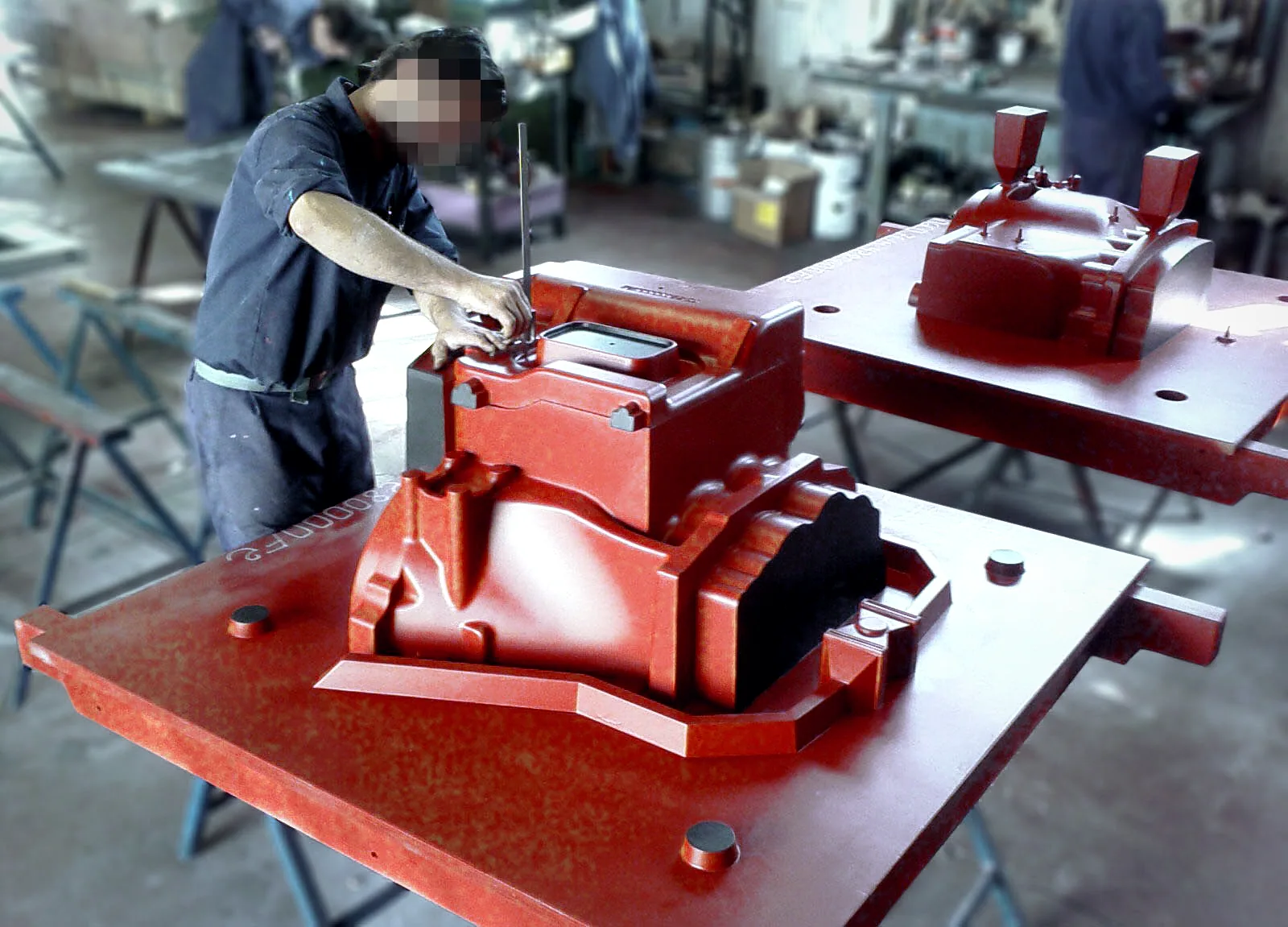
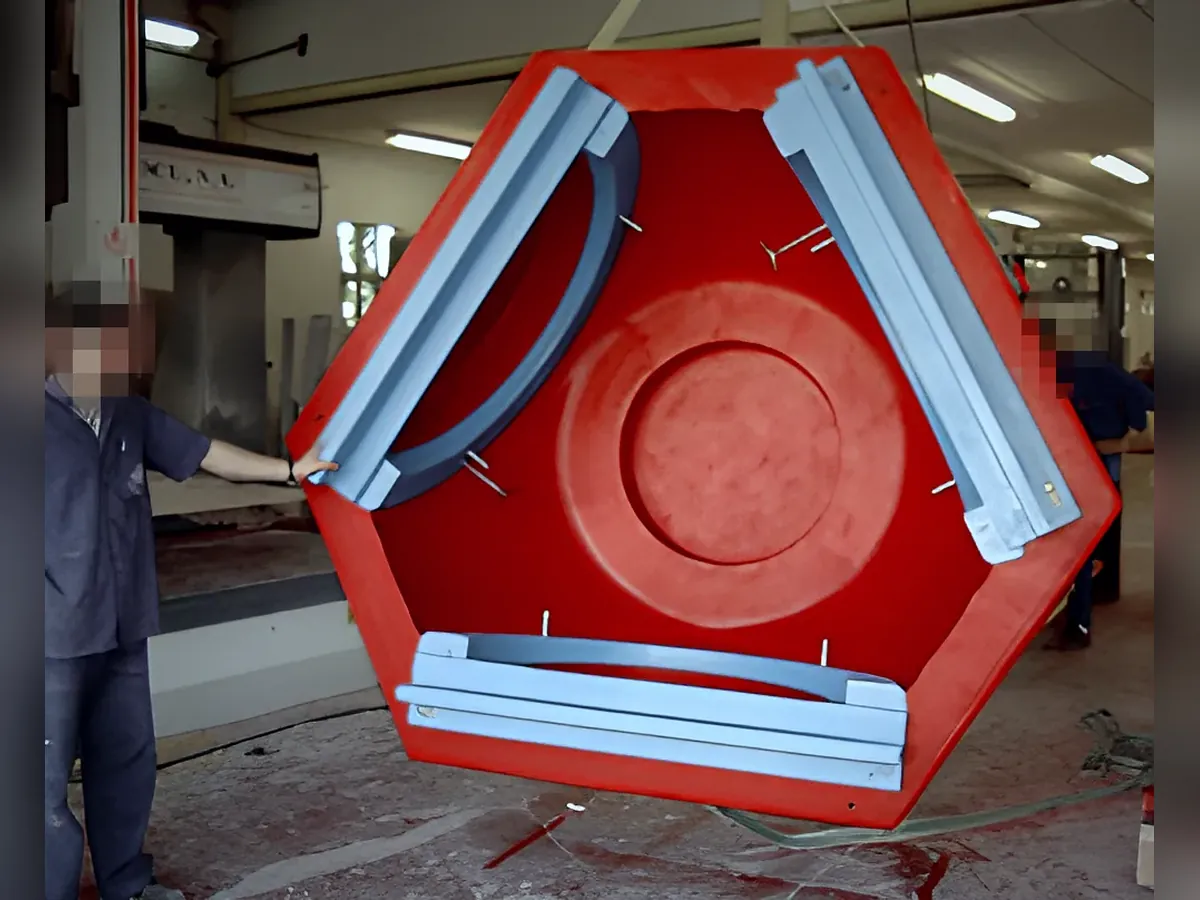
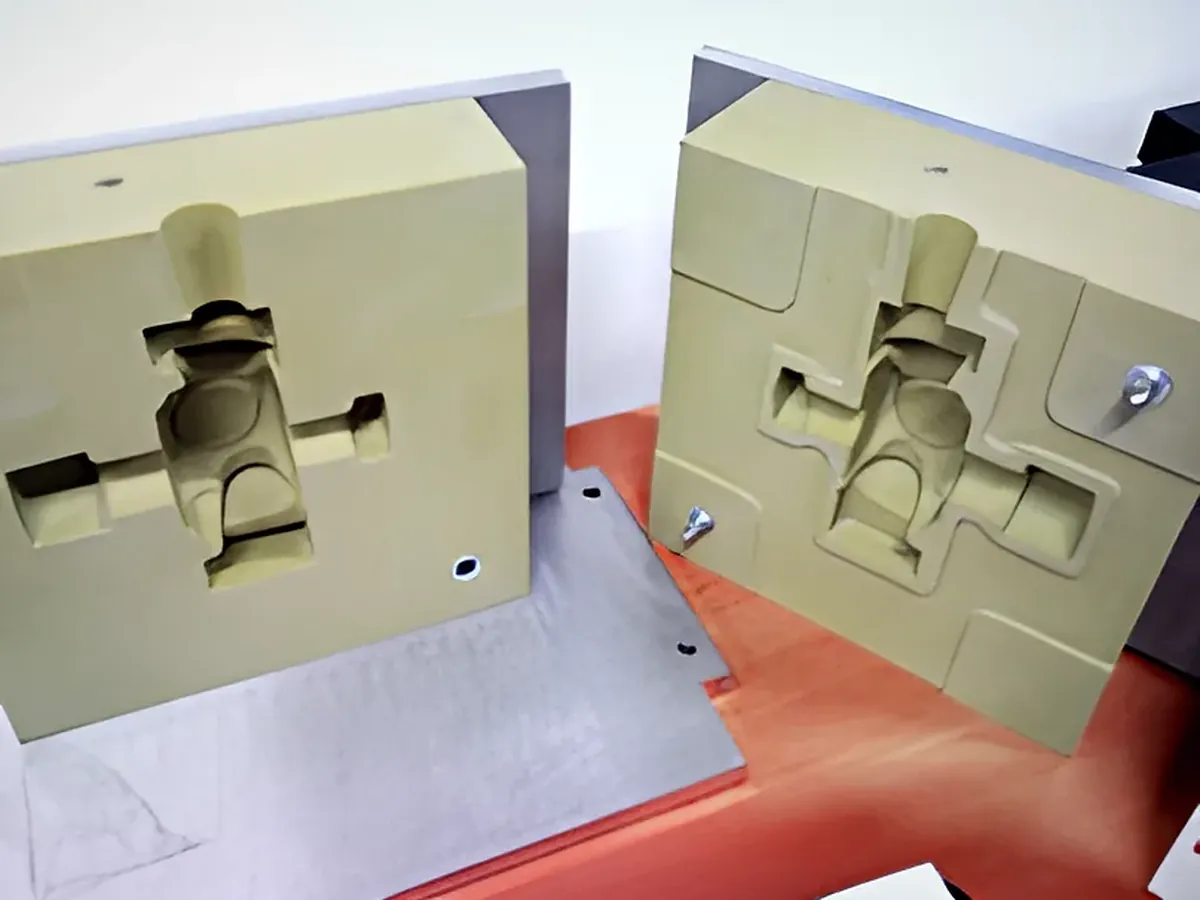
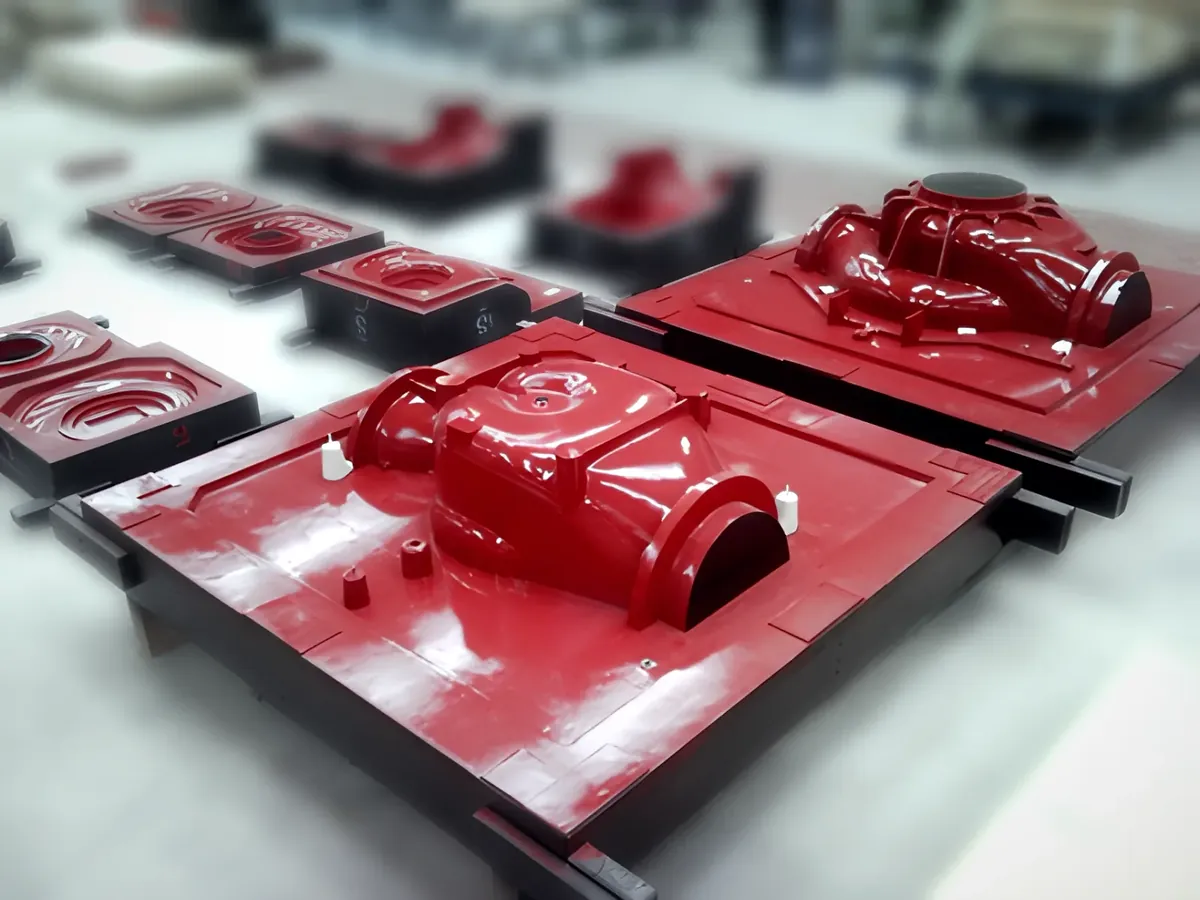
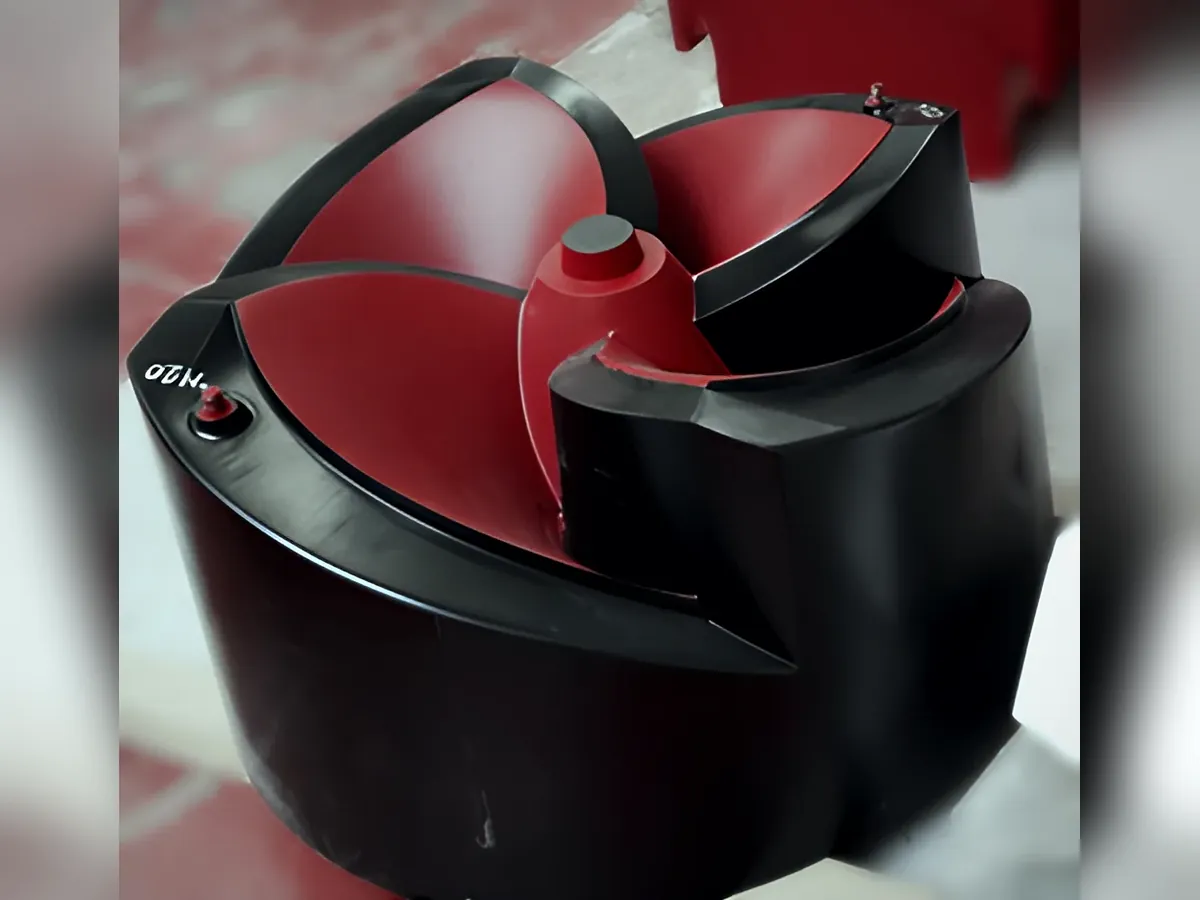
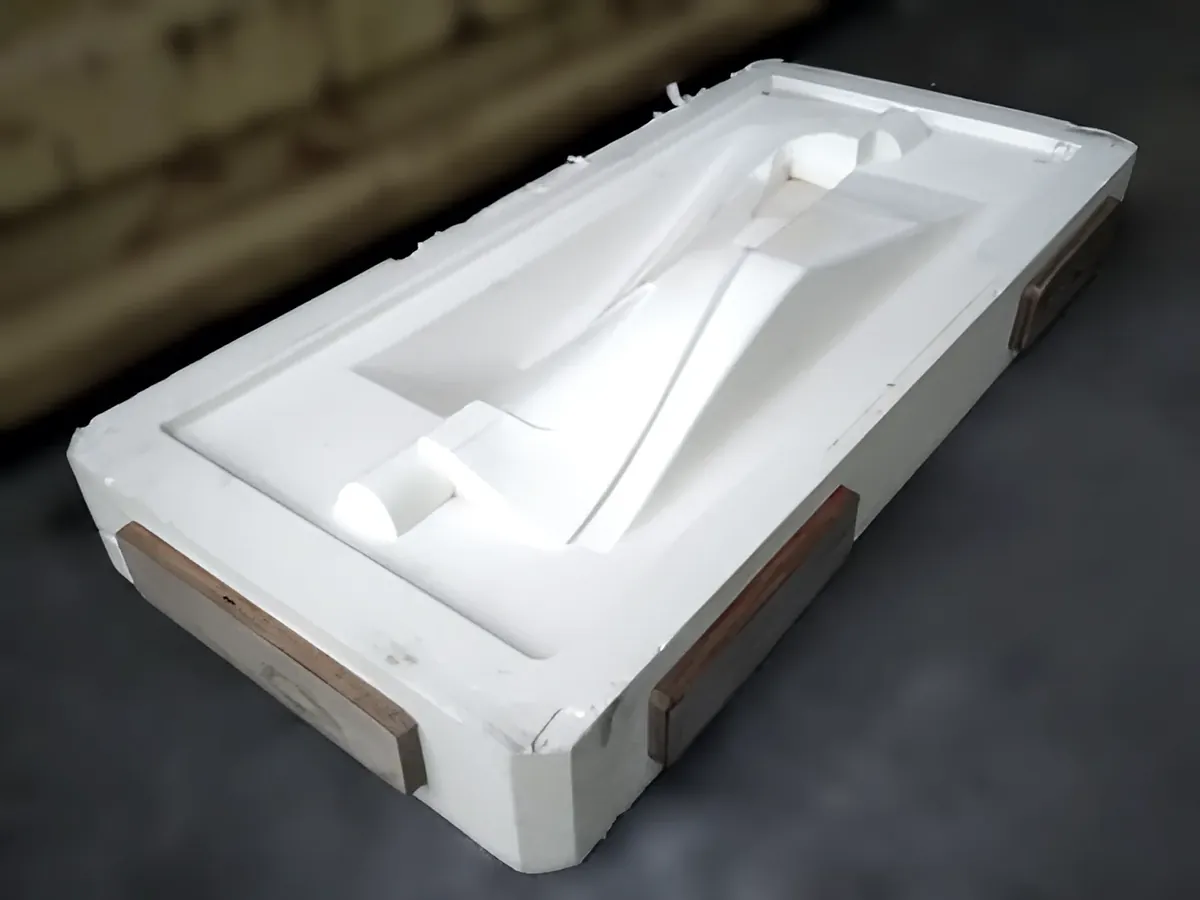
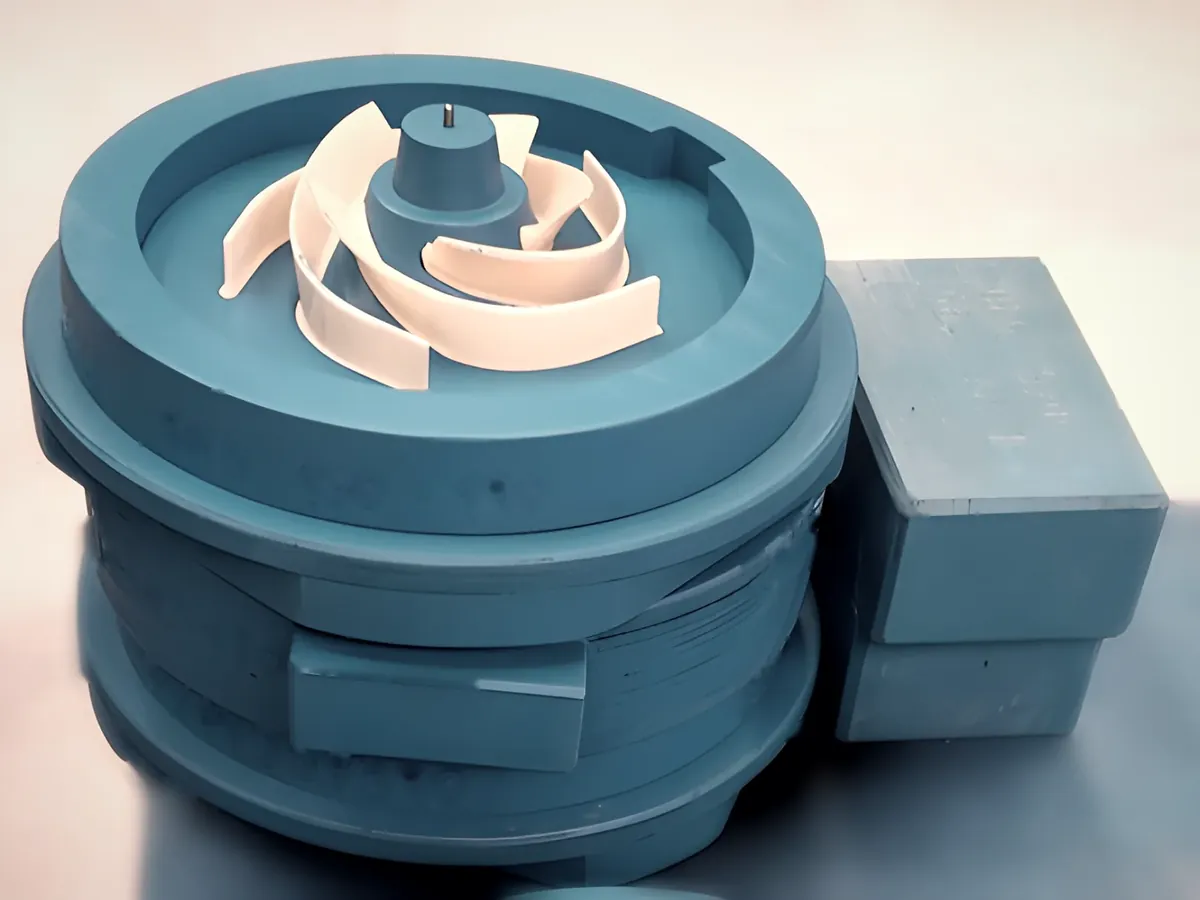
The pattern is the replica of the part that the foundry uses to form, in sand, the cavity into which the metal is poured. The geometry and quality of the final casting depend on its accuracy. Together with the pattern we make the core boxes needed for the internal cavities.
Engineering department
We design the pattern in NX from the customer's drawing or 3D file, in STEP, IGES or STL format. CNC machining is programmed with TEBIS.
Flexible manufacturing
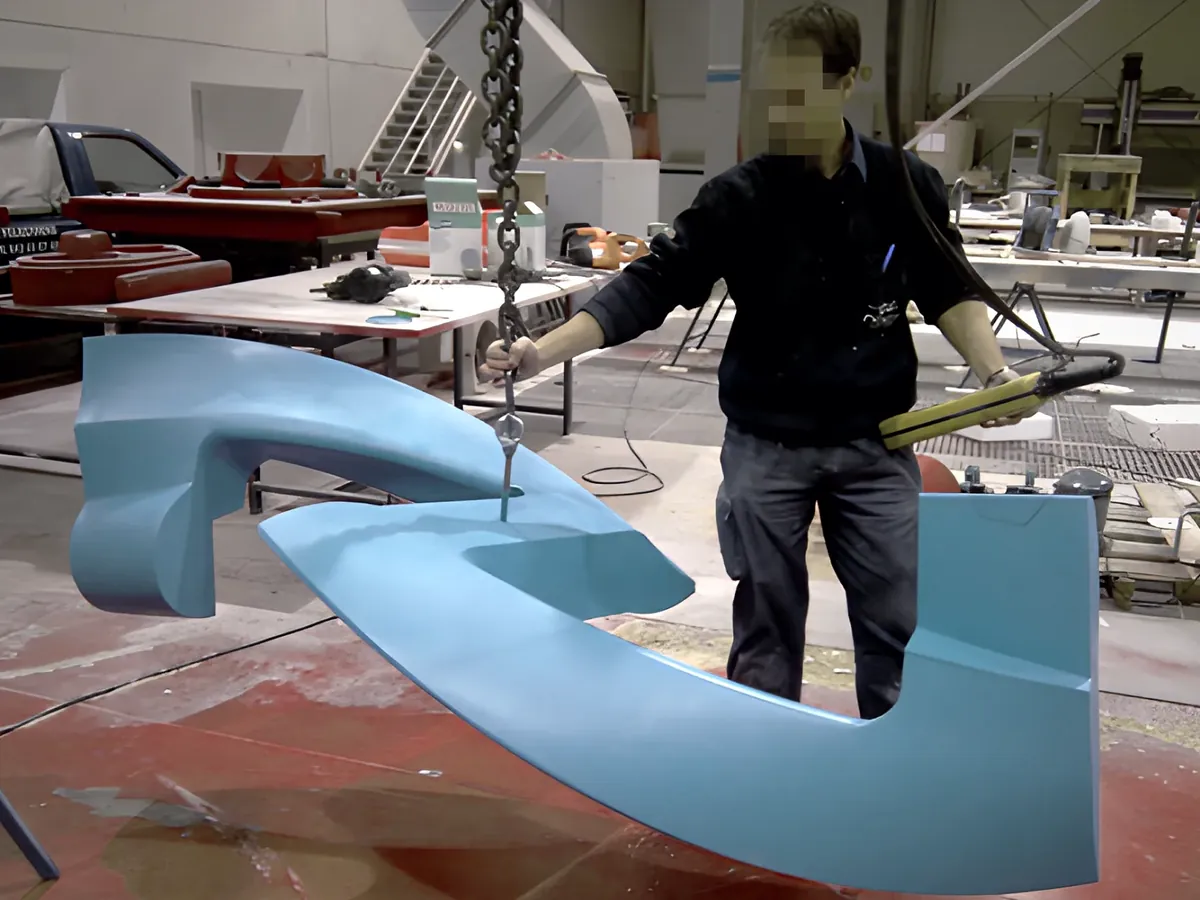
We choose the method for each pattern: manual work by highly experienced patternmakers, 5-axis CNC milling, 3D printing (FDM up to 1150 × 800 × 700 mm and large-format LFAM up to 2500 × 1300 × 1000 mm) or a combination of these techniques.
Inspection and finishing
Every pattern is scanned with a tracker-based 3D scanner, with no need for targets, and compared with the original CAD using a colour deviation map. The final finish is adapted to each customer's needs.
Patterns for metal casting
The patternmaker makes the foundry pattern and the core boxes; with them, the foundry prepares in sand the part to be cast. At Nocu we handle the engineering and manufacture of foundry patterns: we adapt to the way each foundry needs the pattern.
Materials for foundry patterns
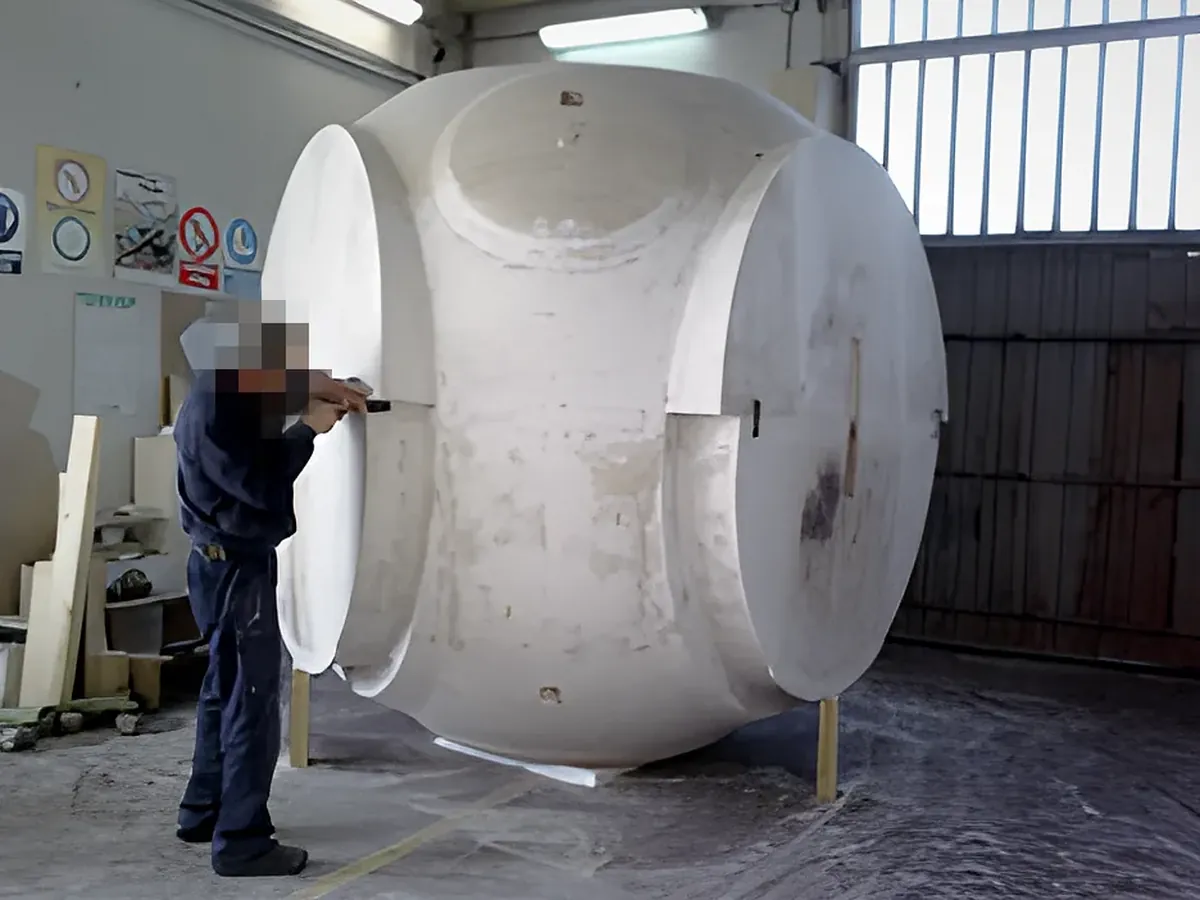
We choose the pattern material according to the production run, the size and the type of casting: wood, resin or expanded polystyrene. Machining is done by 5-axis CNC milling.
Sectors
We make patterns for the marine, wind energy, valve, pump, railway, stove and other industrial sectors, with customers in 9 countries.
- Materials
- Wood, resin, polystyrene
- Foundries
- Ferrous and non-ferrous
- Design and CNC
- NX · TEBIS
- Manufacturing
- Manual, 5-axis CNC and 3D printing
- Inspection
- 3D scanner and colour map
- Quality
- ISO 9001:2015
How we work
Engineering department
Study of the drawing or 3D file and pattern design in NX.
Flexible manufacturing
Depending on the pattern: manual work by highly experienced patternmakers, 5-axis CNC milling, 3D printing or a combination of these techniques.
Inspection
3D scanning and comparison with the original CAD using a colour map.
Final finish
Finish adapted to each customer's needs.
Patterns made
Frequently asked questions
What materials do you use for foundry patterns?
Wood, resin and polystyrene, depending on the production run, the size and the type of casting.
Which file formats do you accept?
STEP (.stp, .step), IGES (.iges) and STL (.stl) files.
What size of patterns can you make?
From small patterns to very large ones. For large parts we combine the work of our patternmakers, 5-axis CNC milling and large-format 3D printing.
How do you check the accuracy of the pattern?
We scan the pattern with a tracker-based 3D scanner, without targets, and compare it with the original CAD using a colour deviation map.
Do you make patterns for ferrous and non-ferrous casting?
Yes. We make patterns for ferrous and non-ferrous foundries, under an ISO 9001:2015 certified quality system.
Do you also make the core boxes?
Yes. Together with the foundry pattern we design and make the core boxes, adapting to the way the foundry works.
Do you make polystyrene patterns?
Yes. We make expanded polystyrene (EPS) patterns, both lost patterns and loose or plate-mounted patterns. Also, if required, the core boxes.
Do you make resin parts?
Yes. We make patterns and core boxes in machinable resin for foundries.
Need a foundry pattern?
Send us the drawing or 3D file and we will reply with a proposal.
Shall we talk about your next project?
Send us the drawing or 3D file. Our engineering department will assess the part and propose the most suitable technology.
39611 Guarnizo (El Astillero), Cantabria, Spain
The Google map only loads if you accept it, because Google Maps sets cookies.